Define the job
Name the substrate, thickness, coating, artwork type, usable area, batch size, edge or mark criterion, and the time available per batch. This prevents advertised power or bed dimensions from standing in for an application requirement.
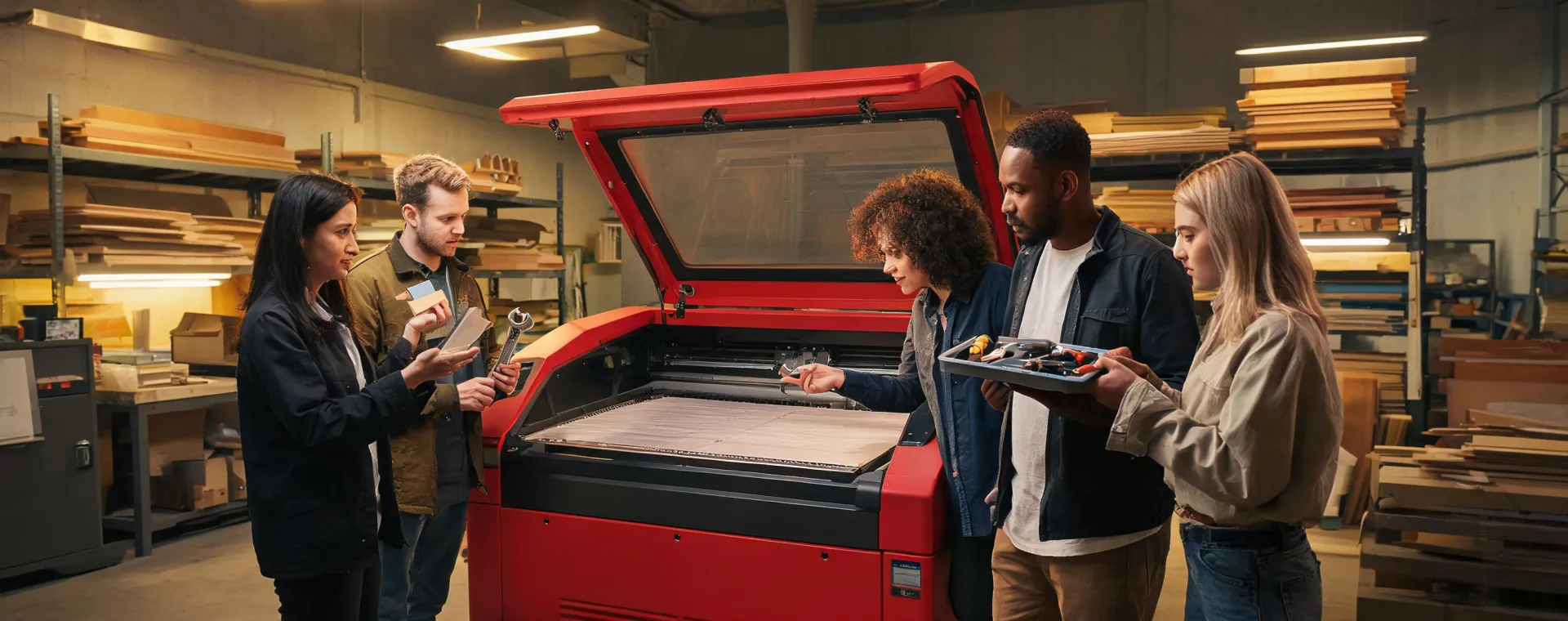
Our role on this site is practical: connect machine selection with the material, result, operator, utility, and maintenance conditions that determine whether a laser workflow fits.
Name the substrate, thickness, coating, artwork type, usable area, batch size, edge or mark criterion, and the time available per batch. This prevents advertised power or bed dimensions from standing in for an application requirement.
Check electrical supply, cooling, exhaust, air assist, material handling, fire response, access clearance, network or file transfer, and the person responsible for daily inspection. A machine footprint is smaller than its operational footprint.
Use representative material and define pass/fail before the demonstration. Record the optical setup and process settings, repeat the accepted condition, photograph the result, and note cleanup or post-processing instead of relying on memory.
Assign operator training, approved materials, preventive cleaning, spare optics, escalation rules, and a review point after real production begins. The purpose is not to freeze a setting forever, but to give adjustment a controlled baseline.
Material composition, coating, reflective behavior, ventilation, operator experience, and tolerance can change the recommendation. A helpful advisor makes those constraints visible early.
A convincing demonstration includes the sample source, setup, settings, inspection method, and a repeated run. An isolated result without those details is difficult to transfer.
Laser processing can create fumes, heat, fire risk, reflected energy, and maintenance exposure. Enclosures, extraction, trained operation, approved materials, and intact interlocks are operating requirements.
Sets output, budget, timing, and risk criteria.
Designs the sample and documents the process window.
Runs checks, loads material, inspects results, and escalates exceptions.
Reviews power, extraction, access, fire response, and controlled materials.
Standards and certifications depend on the exact product, configuration, and destination. Confirm current documents for the quoted machine rather than treating a general badge as configuration-level proof.
Those three items reveal more than a broad request for “the right laser.” We can use them to structure questions about source type, work area, extraction, fixturing, software, training, and support.