Sign & display
Route acrylic, wood, laminate, and coated substrates through a repeatable cut-and-engrave queue.
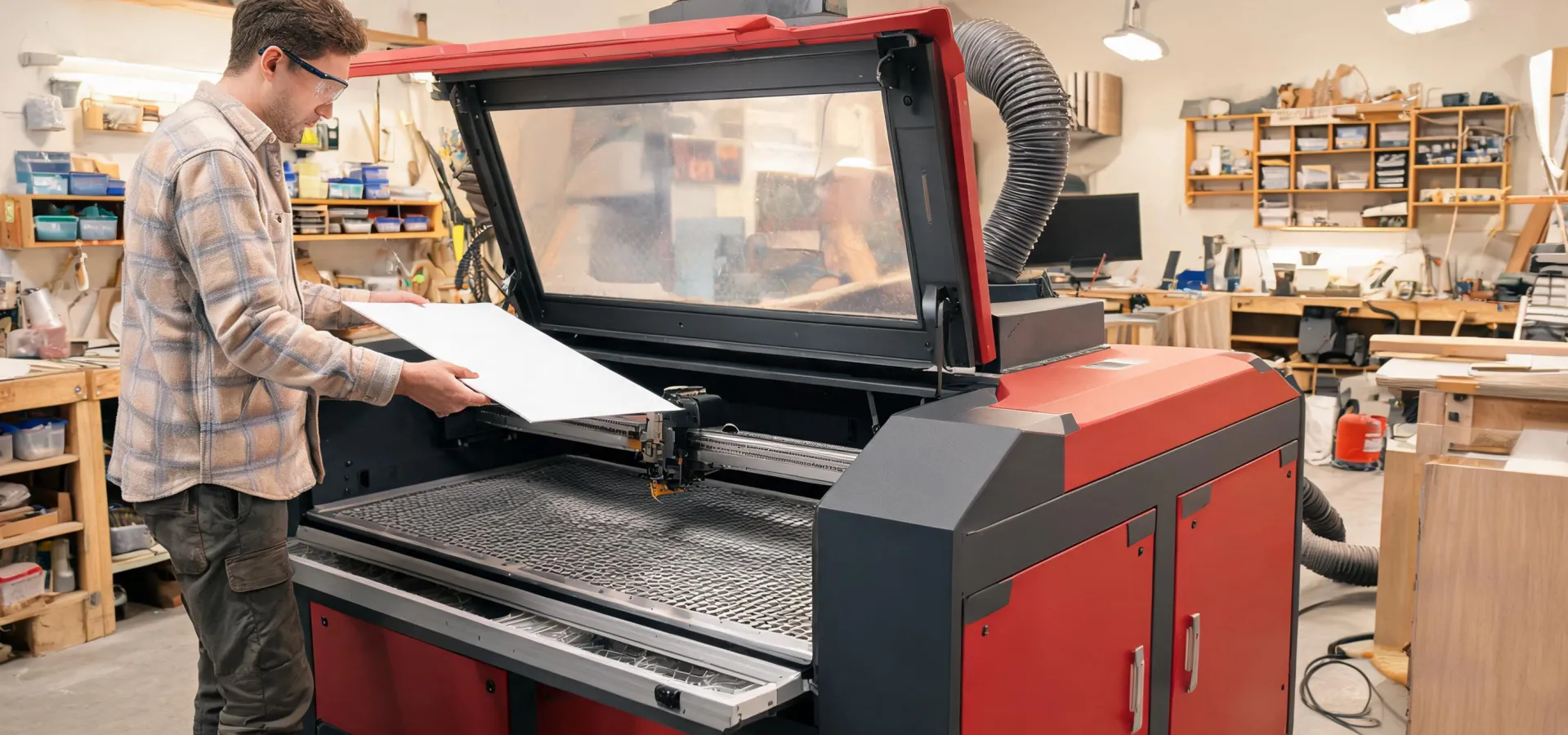
Compare machine formats, test the material that matters, and build an operating plan around extraction, optics, power, and workflow—not a feature checklist.
Four familiar production settings, each with different material, ventilation, throughput, and operator needs.
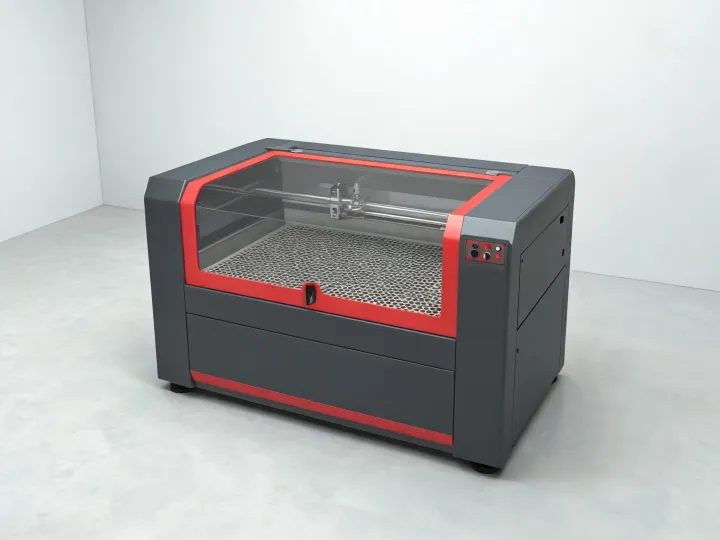
For organic materials and acrylic workflows where bed size, exhaust, focus, and tube maintenance shape daily output.
Compare CO2 formats →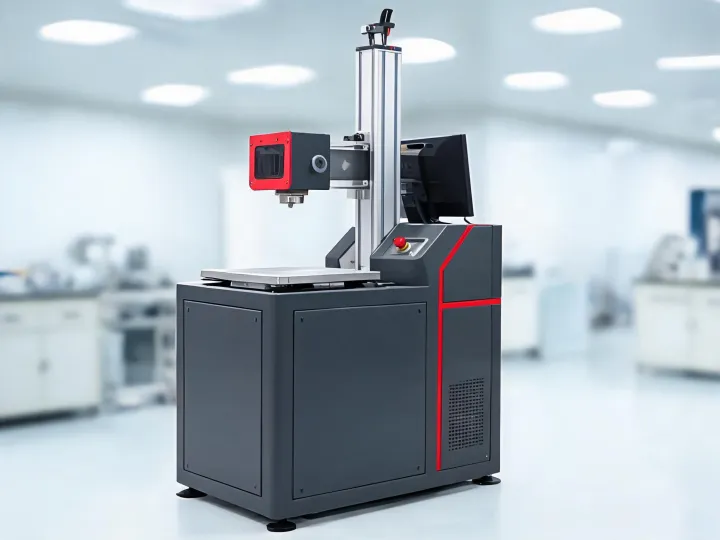
For permanent marks on compatible metals, with attention to lens field, fixture control, contrast, and cycle planning.
Review marking paths →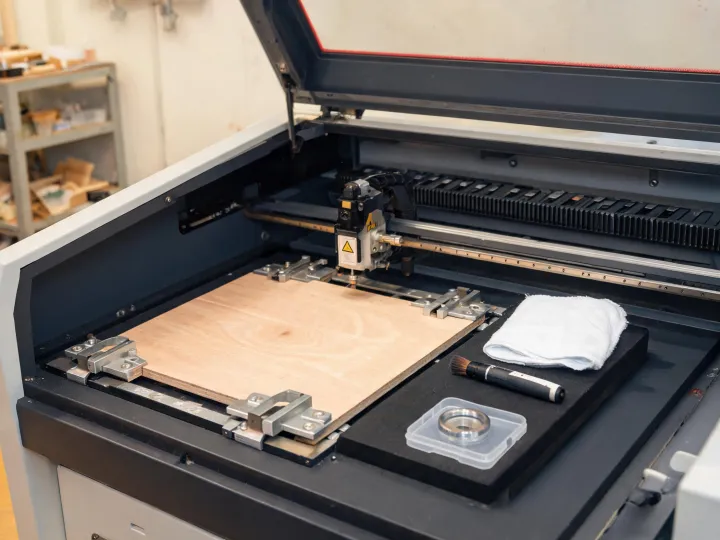
For repeatable personalization where artwork preparation, fixturing, material variation, and inspection matter together.
See engraving options →Acrylic, wood, coated stock, and adhesives produce different fumes. Record the material, expected run length, duct route, and filtration constraint before sizing the machine around power alone.
Application review · air pathFor repeat jobs, test the jig and artwork origin together. The acceptance sample should include first-piece alignment, mid-batch drift checks, and a saved setup record an operator can reuse.
Application review · repeatabilityInspect edge quality after multiple cycles, not just one demonstration. Include lens condition, focus verification, debris removal, cooling status, and the time required to restore the workcell.
Application review · maintenance loadShare the material, thickness, artwork, batch size, and desired finish. An applications conversation can then focus on the process variables that change the answer.